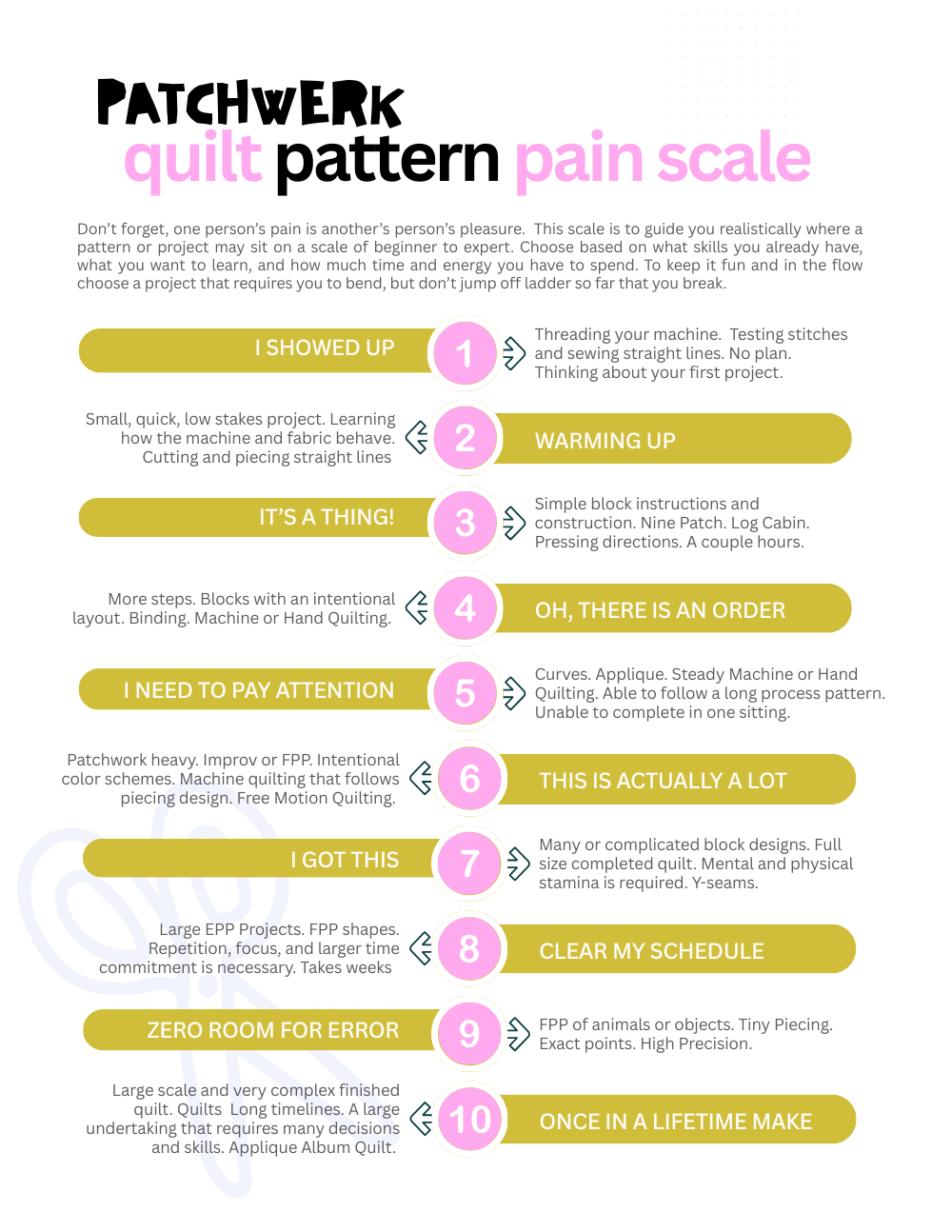
About Sewing Pattern Difficulty Levels
We have all bought patterns that have a simple scale at the top of the pattern or even on the cover. The point of them is to let you know if they think you can make the thing the pattern is for. I’ve seen words like beginner, confident beginner, novice, intermediate, expert or advanced.
I’ve always felt like this was a little incomplete. If I see one star I think this is really easy, I can do it quickly and there aren't a lot of skills needed. Great. Simple. But what about when we get to intermediate or advanced. When is the last time you have ever seen an advanced pattern? This got me thinking.
What is Beginner really?
Personally, this is just me, I don't love how everything needs to be beginner friendly. I’m not a beginner. No one I know that sews is an absolute beginner. We ALL were at one time, but I know I want to choose patterns based on how hard it is, not how much they want me to think I can handle it. And “Advanced Beginner”, come on now. Which is it?
What skills do I need?
I began writing my own patterns almost as soon as I began sewing. NOT because I’m just so smart but because I like to have control of what I’m making and I like to make it personalized. I’ve probably never made anything exactly as the pattern said. Either because I already knew a way I liked it better, or because I didn’t yet have the skill to do what the pattern said. Usually the latter. So it would be nice to know the skills needed, not just the hardware or fabric, for a given pattern. I felt like that part is sorely lacking and super helpful.
The Goal is Flow
We also know that for people that sew or create at all, we all have the same goal, really, and that is to reach flow state. This is the perfect match of your skill level and the difficulty level of the project.
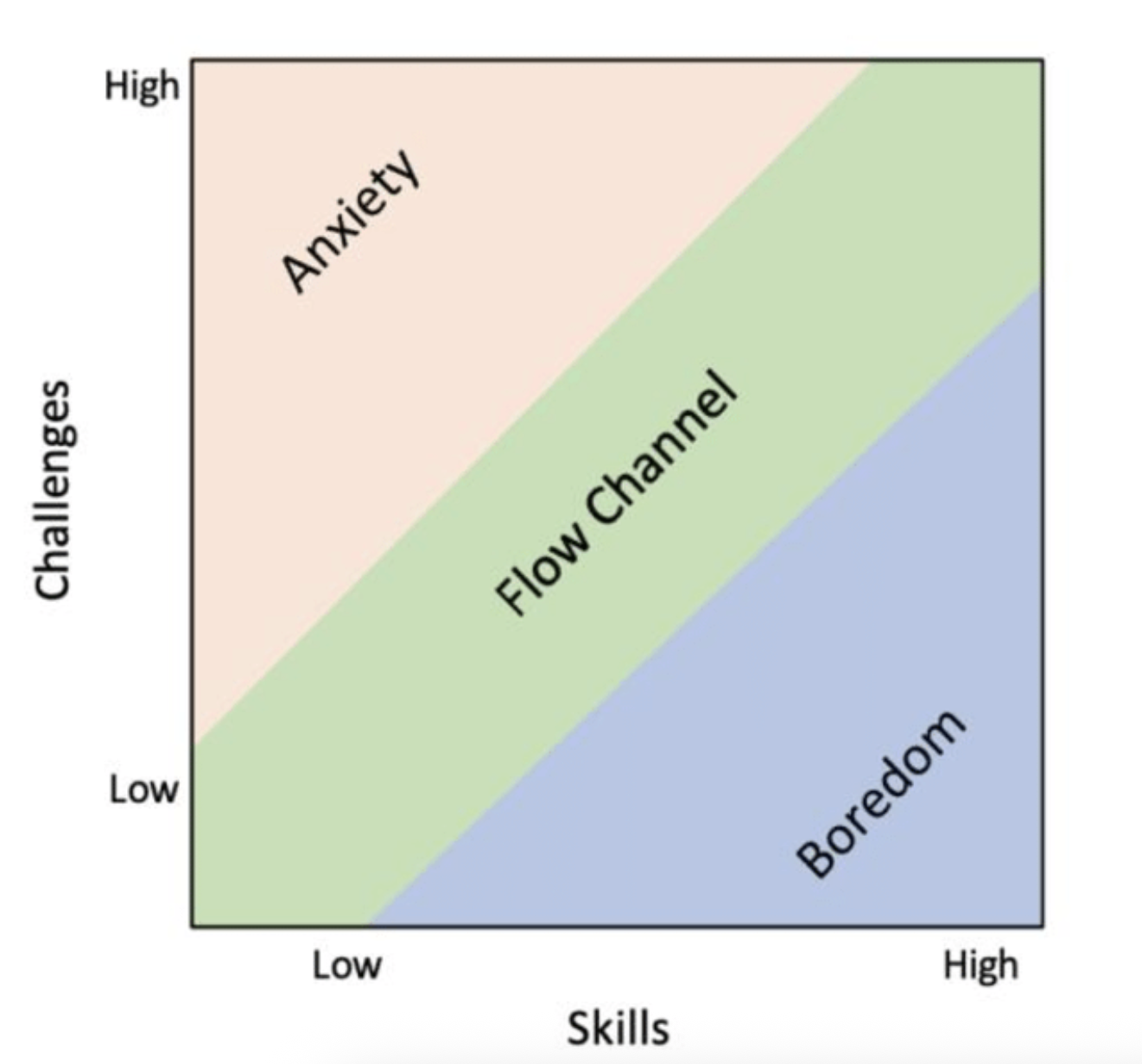
From reachgate.com Chart Proposed by Csikszentmihalyi
In an article on headspace.com they say “flow state was popularized by positive psychologists Mihaly Csikszentmihalyi and Jeanne Nakamura, flow state describes a feeling where, under the right conditions, you become fully immersed in whatever you are doing. “There’s this focus that, once it becomes intense, leads to a sense of ecstasy, a sense of clarity: you know exactly what you want to do from one moment to the other; you get immediate feedback,” Csikszentmihalyi said in a 2004 TED Talk.”
If I do something I totally understand, that I’ve have done a million times, i’m probably going to try to get out of it. Because I’m going to be SO BORED. If I’m trying something for the first time that's just totally over my head, I’m probably not doing to try for too long.
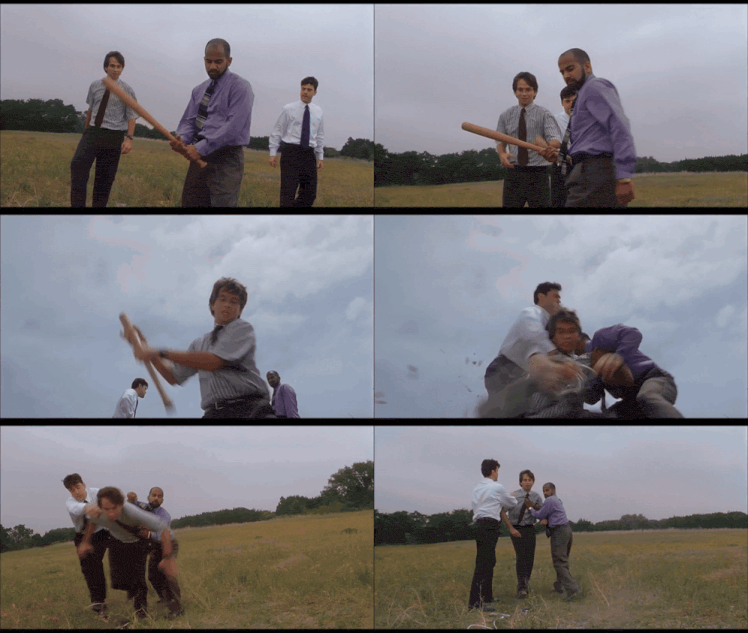
Let’s say you buy your first sewing machine with the intention to make your daughter’s wedding dress. You will likely give up pretty quickly then take your Singer out back like Samir and Micheal beating that printer with a bat and their bare hands in Office Space.
To reach flow state you must be doing something you already know you enjoy, you have to feel confident about your abilities, and there needs to be things you have to figure out too. Too much familiarity is boring. Not enough is discouraging. My goal with Patchwerk and all my previous projects is to help creative people not be so damn hard on themselves, reach that pinnacle of creating when the whole world pauses for you. These are both things I work towards every single day.